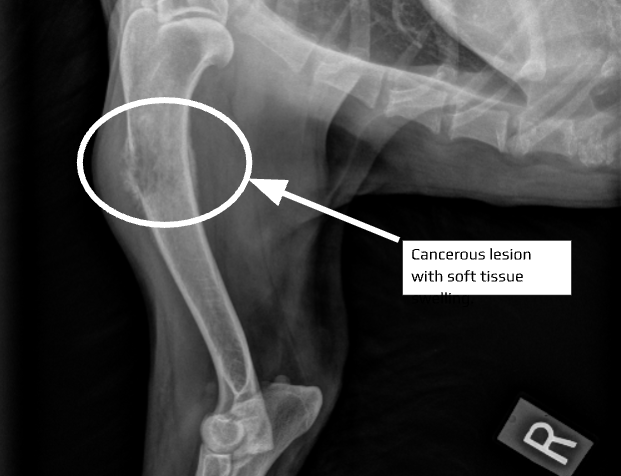
A diagnosis of cancer involving a bone or limb can be overwhelming. When a tumor affects the bones or muscles, treatment means carefully balancing three goals: controlling the disease, keeping your pet comfortable, and preserving as much function as possible.
Our orthopedic surgeons provide surgical options for pets with orthopedic tumors, including limb amputation and limb-sparing procedures. Each case is evaluated individually, with treatment recommendations based on the location and extent of the tumor, the affected limb, overall health, and long-term goals for the patient.
Diagnosis & Surgical Planning
Evaluation begins with a thorough physical and orthopedic examination and a review of your pet's medical history and previous diagnostic testing. X-rays and advanced imaging may be used to evaluate the tumor and determine how much of the surrounding bone and tissue is affected.
When appropriate, additional diagnostic testing and consultations with your pet's primary veterinarian and a veterinary oncology team may be recommended to better understand the disease and determine the most appropriate treatment approach.
Limb Amputation
Limb amputation may be recommended when a tumor extensively affects a limb, and complete removal of the diseased tissue cannot be achieved while preserving a functional limb.
Although the decision to amputate can be difficult, dogs and cats can often adapt remarkably well to life on three legs. Removing the affected limb can provide pain relief and allow the patient to maintain mobility and quality of life.
The most common bone tumor in dogs is osteosarcoma, which tends to be locally aggressive and can spread elsewhere in the body. For this reason, surgery is often combined with additional treatment. Amputation removes the source of pain quickly and reliably. Reported survival times are meaningfully longer when amputation is followed by chemotherapy under the direction of a veterinary oncologist. We will coordinate closely with your oncology team so that pain control, surgery, and any follow-up therapy work together.
Our surgical team focuses on creating a comfortable, functional amputation site and developing an individualized recovery plan to help each patient adapt to their new way of moving.
Limb-Sparing Surgery
For select patients, limb-sparing surgery may provide an alternative to amputation. The goal of limb-sparing surgery is to remove the tumor and an appropriate margin of affected tissue while preserving as much of the functional limb as possible.
Not every tumor or patient is a candidate for limb-sparing surgery. Tumor location, size, involvement of surrounding structures, bone stability, and the overall health of the limb all play an important role in determining whether this approach is appropriate.
When limb sparing is possible, advanced imaging can be particularly valuable for defining the extent of the tumor and planning the surgical approach.
Individualized Cancer Care
Orthopedic oncology cases often require collaboration between surgical, primary care, and oncology teams. Our goal is to provide thoughtful surgical recommendations based on each patient's specific disease and to prioritize comfort, function, and quality of life throughout treatment.
Every recommendation is individualized. Some patients are best served by amputation, some by limb-sparing surgery, and some by treatment focused primarily on comfort. We will talk through the realistic expectations, benefits, and risks of each path so you can make the decision that is right for your pet and your family.